Image Credit – Hema
The swastika is one of the world’s oldest and most powerful symbols, carrying centuries of cultural, spiritual, and historical significance. Though often misunderstood due to its misuse in the 20th century, the swastika has been a sacred emblem of prosperity, good fortune, and well-being in many ancient civilizations. In this article, we’ll explore the true meaning, origins, and transformation of the swastika, uncovering how a symbol of peace became one of controversy — and how it continues to reclaim its original meaning in modern times.
The Swastika – Symbol of Ancient Spirituality and Misunderstood History

The Origin of the Swastika
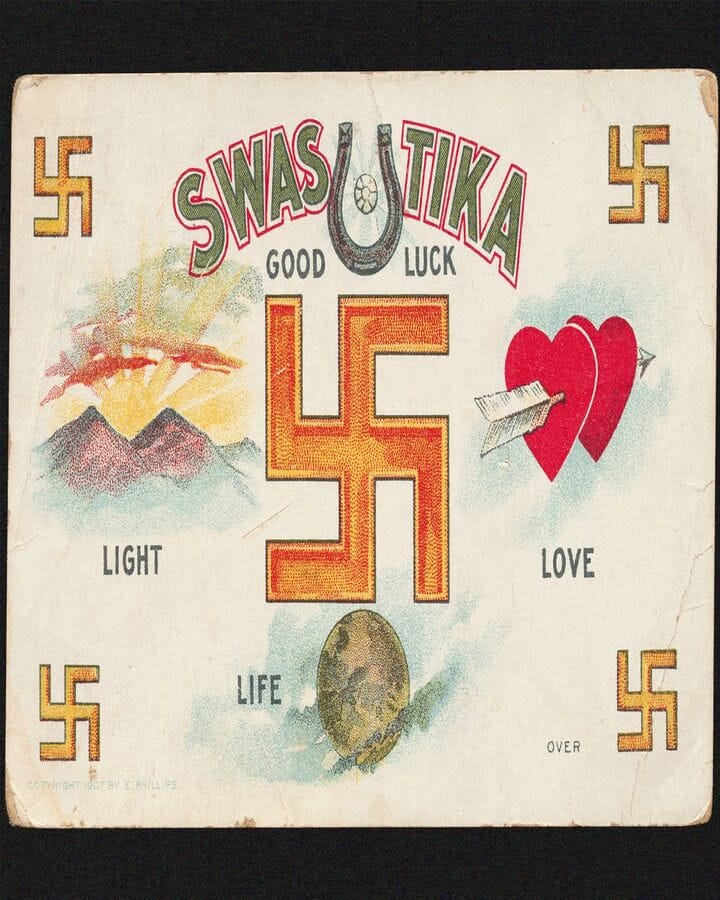
The word “swastika” comes from the Sanskrit term “svastika”, meaning “well-being,” “good luck,” or “auspiciousness.” The symbol itself — a cross with arms bent at right angles — dates back over 5,000 years and appears in ancient artifacts from India, China, Greece, Mesopotamia, and even Native American cultures.
In Hinduism, the swastika is deeply sacred. It represents Lord Vishnu’s energy, the sun’s movement, and the eternal cycle of life. It’s commonly used in Hindu rituals, temple decorations, and even drawn on doorways during festivals for blessings and prosperity. Similarly, in Buddhism, it symbolizes eternity, dharma, and universal harmony, while in Jainism, it marks the seventh Tirthankara, representing spiritual evolution and peace.
The swastika’s presence across so many ancient societies shows that it was once a global symbol of positivity and divine energy.
The Spiritual Meaning Behind the Swastika
The swastika carries deep symbolic meanings related to balance, continuity, and life’s cyclical nature. Its four arms represent elements like the four directions (north, south, east, west), the four seasons, and the four stages of life (birth, growth, maturity, death).
In Hindu tradition:
- The right-facing swastika represents the sun, prosperity, and forward movement.
- The left-facing swastika (called sauwastika) is associated with night and the inward journey of spirituality and meditation.
Together, they remind believers of harmony between material and spiritual realms — a connection between human life and cosmic order.
How the Swastika Was Misused
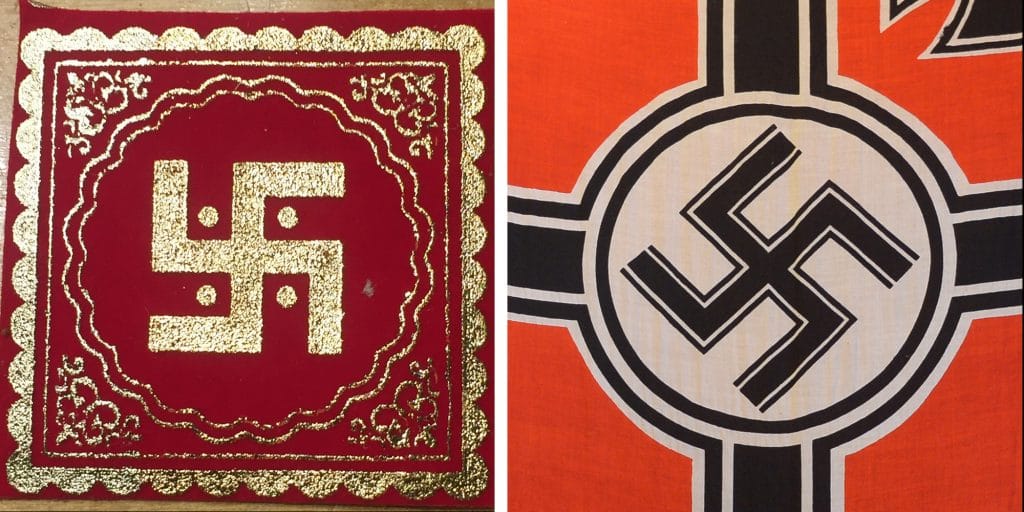
Unfortunately, the swastika’s meaning took a tragic turn in the early 20th century. The symbol was adopted by Nazi Germany, stripped of its ancient context, and used as an emblem of hatred, nationalism, and racial superiority.
This misuse during World War II caused the swastika to be associated with violence and oppression in the Western world. Its ancient roots of peace and positivity were overshadowed by the dark legacy of the Nazi regime.
Even today, many people in Europe and the Americas view the swastika as offensive due to this historical misuse, while in Asia — especially India, Nepal, Japan, and Thailand — it continues to be a sacred sign of prosperity and protection.
Reclaiming the True Meaning of the Swastika
In recent years, scholars, spiritual leaders, and cultural organizations have been working to restore the swastika’s original meaning. Efforts are being made to educate people about its pre-Nazi origins and emphasize its role as a sacred and universal symbol long before it was misappropriated.
In India and many parts of Asia, it’s still drawn during weddings, housewarmings, and religious ceremonies. In Japan, the symbol, known as “manji,” is used on maps to mark Buddhist temples, signifying harmony and balance.
By understanding its true history, we can separate the ancient swastika — a sign of light and positivity — from the political distortion that tarnished it in the modern era.
The swastika stands as a reminder of how symbols can transcend time, culture, and even misunderstanding. Its true meaning lies in peace, prosperity, and the eternal rhythm of life. Recognizing the swastika’s spiritual and cultural origins allows us to appreciate its depth and significance beyond historical misinterpretation.
By reclaiming and respecting the original context of the swastika, we not only honor the wisdom of ancient civilizations but also promote a message of understanding, balance, and global harmony.
Let us know in the comments your thoughts on the historical and cultural significance of the swastika.
Leave a Reply
You must be logged in to post a comment.