Image Credit – Hema
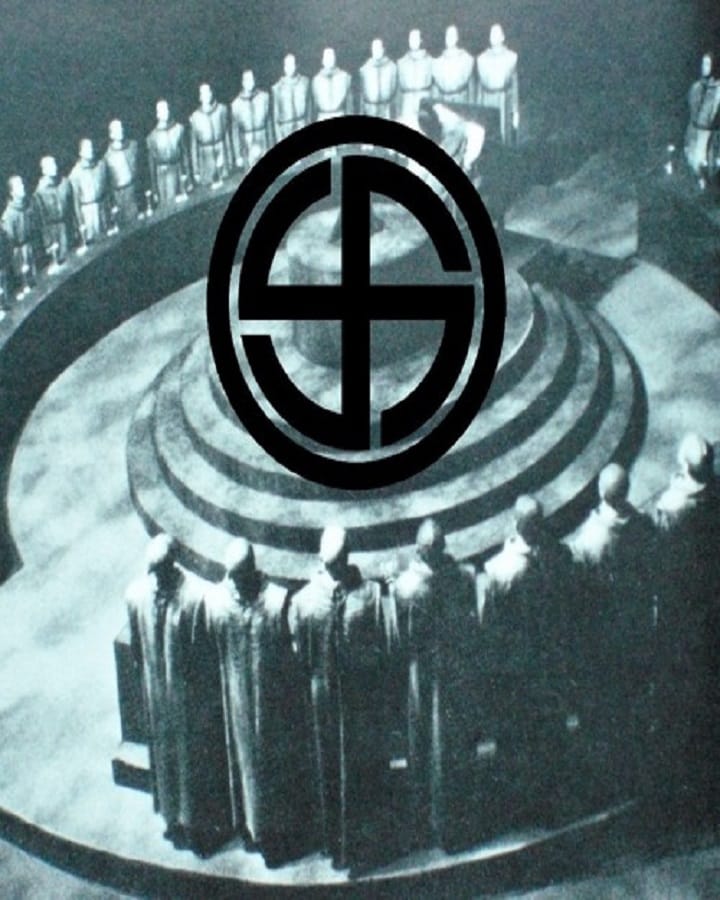
Throughout history, secret societies have fascinated and mystified those seeking to understand the hidden forces shaping nations. Among these enigmatic groups, few are as controversial and misunderstood as the Thule Society. Rooted in German occultism and nationalist ideology, the Thule Society served as a curious intersection between esoteric mysticism and political power during the early 20th century.
The Thule Society: Germany’s Shadowy Bridge Between Occultism and Politics

Origins of the Thule Society
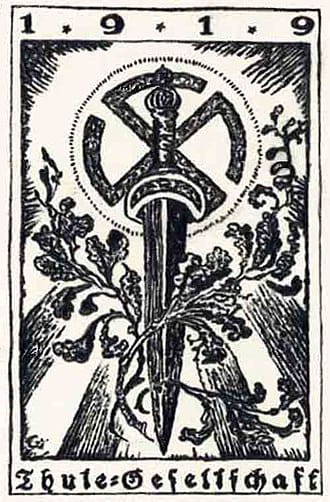
The Thule Society was founded in Munich, Germany, in 1918 by Rudolf von Sebottendorf, a mystic and occultist deeply interested in ancient Nordic myths and the idea of Aryan ancestry. Named after Thule—a mythical northern land said to be the cradle of the Aryan race—the society was originally an offshoot of the Germanenorden, a secret brotherhood devoted to racial purity and nationalist ideals.
While it began as a secret society focusing on spiritual enlightenment and esoteric symbolism, the Thule Society quickly evolved into something more politically charged. Members were drawn not only to occult rituals but also to radical nationalist movements that emerged in post–World War I Germany.
The Blend of Mysticism and Nationalism
The Thule Society combined occult history and esoteric mysticism with political aspirations. Its teachings incorporated astrology, runic symbols, and the concept of a lost Aryan homeland that connected the German people to divine origins. Members believed that reconnecting with this mythic past could restore Germany’s strength and unity after its devastating defeat in World War I.
This blending of myth, mysticism, and racial ideology proved to be a potent—and dangerous—mixture. While many secret societies of the era focused purely on spiritual exploration, the Thule Society used esoteric beliefs to justify political extremism and cultural superiority.
The Thule Society and Nazi Origins
One of the most debated aspects of the Thule Society is its connection to the origins of the Nazi Party. Although Adolf Hitler was not a member, several early Nazi figures—including Rudolf Hess, Hans Frank, and Dietrich Eckart—were affiliated with or influenced by the group. Eckart, in particular, was a prominent Thule member who later became a mentor to Hitler and contributed to the development of his nationalist ideology.
Through these connections, the Thule Society served as an intellectual incubator for ideas that would later become central to Nazi propaganda—particularly the myth of Aryan superiority and the romanticization of ancient Germanic heritage.
Decline and Lasting Legacy
By the early 1920s, the Thule Society’s influence began to wane. As the Nazi Party rose to power, political pragmatism replaced the mystical nationalism of the Thule circle. Many of its occult elements were either suppressed or absorbed into broader Nazi symbolism.
Yet the legacy of the Thule Society endures as a cautionary tale. It illustrates how esoteric mysticism and nationalist ideology can merge to create powerful myths capable of shaping real-world events. Modern historians continue to study the group as part of the broader tapestry of German occultism and early 20th-century political movements.
The Thule Society remains one of history’s most intriguing secret societies—an organization that blurred the lines between spiritual pursuit and political ambition. Its story serves as both a reminder of the enduring allure of hidden knowledge and a warning about the dangers of intertwining occult history with extremist ideology.
In exploring the Thule Society, we uncover not just the mysticism of Germany’s past but also timeless lessons about belief, power, and the human search for meaning in turbulent times.
Leave a Reply
You must be logged in to post a comment.